


Performance Tips
Improve Speed with Sprint Mechanics
Speed isn’t just about being “naturally fast.” It’s a skill - and like any skill, sprinting can be trained, refined, and improved with the right mechanics. Small technique changes can help athletes run faster, conserve energy, and reduce injury risk.
If you want to drop your 60-yard dash time or improve game-speed performance, sprint mechanics must be a part of your training.
Why Sprint Mechanics Matter
Proper sprint form allows your body to use force efficiently. When mechanics break down, athletes waste energy, lose speed, and place unnecessary stress on their hamstrings, hip flexors, and lower back.
Improving form is often the fastest way to see immediate gains - even before strength and conditioning catch up.
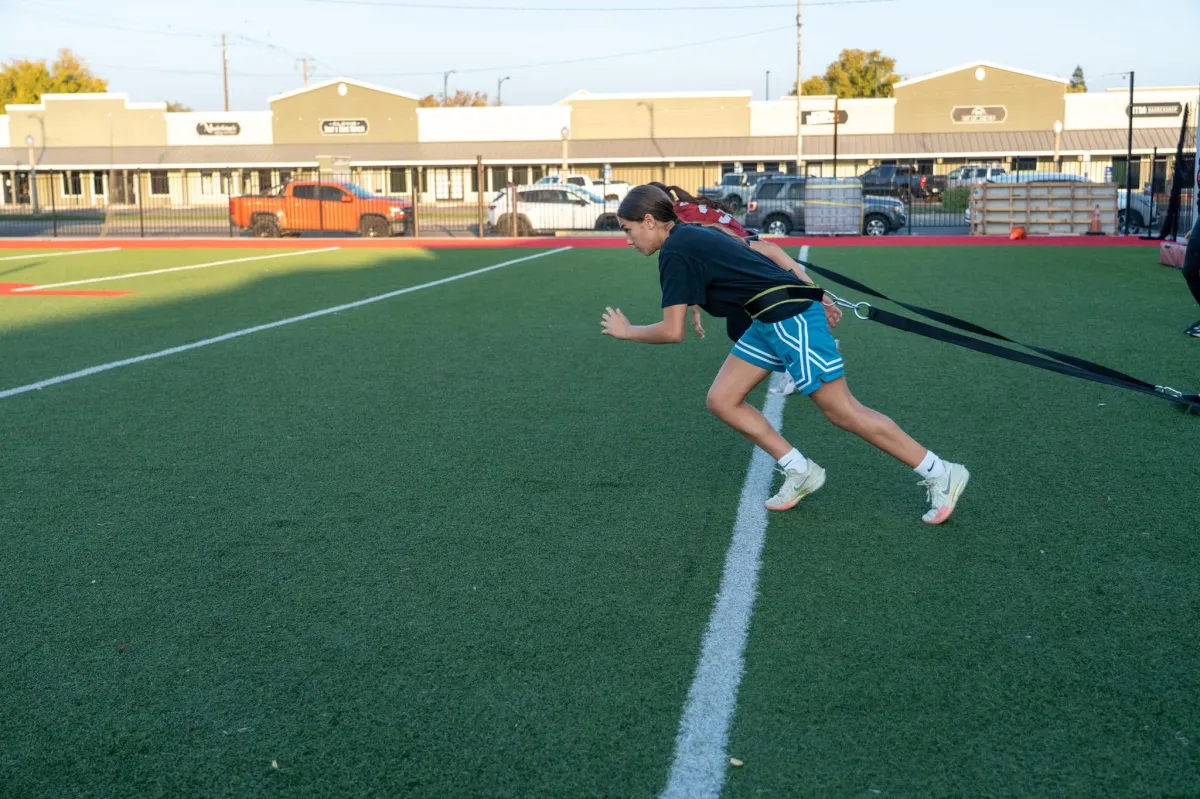
1. Acceleration Position: The Forward Lean
During the first 10-20 yards, your body should be in a forward-leaning position, pushing the ground behind you.
Key cues:
“Drive out, don’t pop up.”
“Push, push, push.”
Chest over thighs, shin angles pointing forward.
This helps you create horizontal force - the kind that actually moves you forward faster.
2. Arm Drive Controls Your Stride
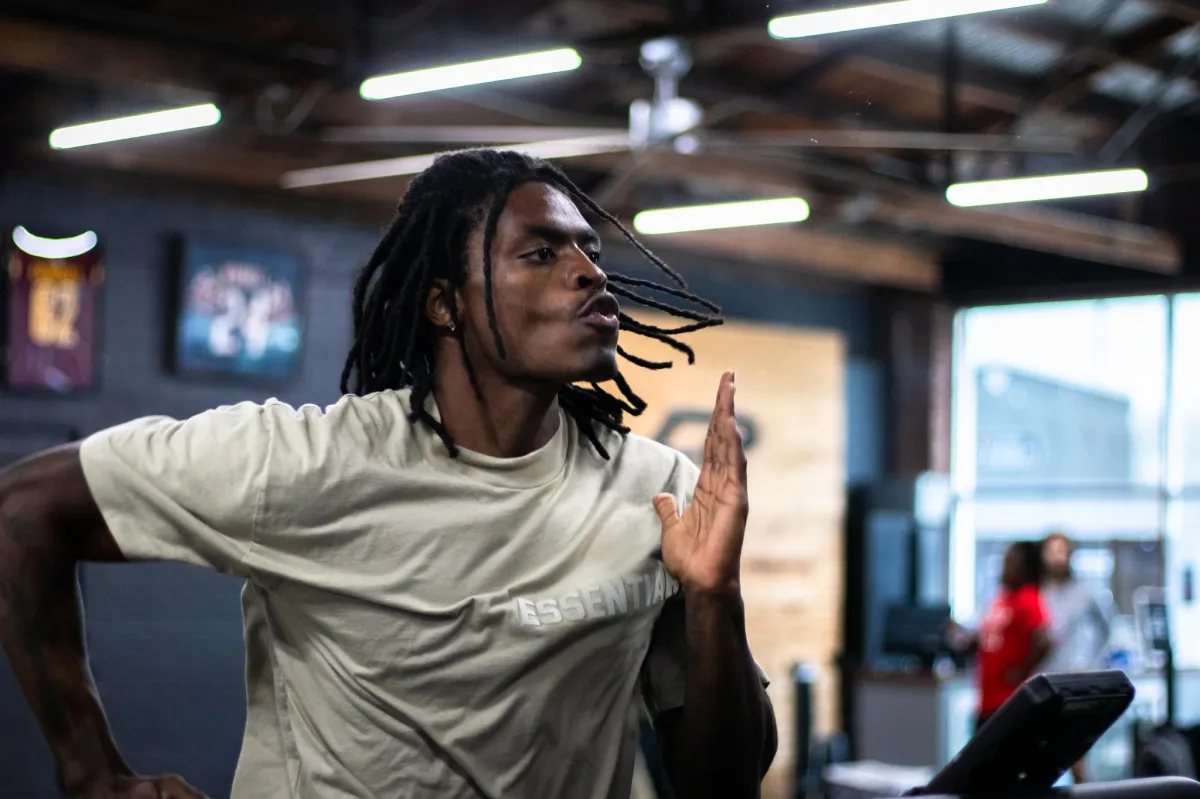
Your arms dictate rhythm, turnover, and power. Inefficient arm movement causes wasted energy and slower times.
Cues to focus on:
90-degree elbow bend
Hands travel from cheek (front) to hip (back)
Keep shoulders relaxed, not shrugged
When your arm swing is crisp and controlled, your legs will follow.
3. High Knee Recovery = Faster Stride Cycle
At max velocity, your knee should recover high under your hip. This creates a longer, more powerful stride without overstriding.
Avoid reaching with your foot - that causes braking forces and slows you down.
4. Foot Strike Should Be Under the Hips
Fast athletes land on the ball of their foot directly beneath their center of mass.
Landing too far in front of your body:
Slows you down
Increases hamstring strain risk
Reduces stride frequency
Drills like A-Skips and Wall Drills reinforce proper foot placement.
5. Relaxation = Speed
One of the biggest mistakes athletes make is tensing up when trying to sprint faster.
Loose = fast.
Tight = slow.
Relax your jaw, shoulders, and hands. Think: “Fast arms, smooth body.”
6. Strength & Mobility Support Great Mechanics
Mechanics improve fastest when paired with:
Posterior chain strength (hamstrings, glutes, lower back)
Hip flexor mobility
Core stability
Plyometrics
Your body must be strong enough to hold proper positions at high speed.

Ready To Get Started?
PROGRAMS
ABOUT
MORE
© Copyright 2026. Athletic Performance . All Rights Reserved.