







Performance Tips
Should Athletes Do Long Runs?
For years, long-distance running has been seen as the “work hard” badge of honor for athletes. Coaches used it for conditioning, players did it to “get in shape,” and teams built entire preseason programs around it.
But for most field and court athletes—baseball, softball, soccer, football, basketball, volleyball - long runs can actually slow you down, decrease explosiveness, and increase injury risk.
Let’s break down why.
1. Long Runs Don’t Train the Energy System You Actually Use
Sports like baseball, softball, and football rely on short bursts of power, not steady-state endurance.
During games, athletes rely on:
ATP-PC energy system(0–10 seconds of max output)
Anaerobic glycolysis(10–60 seconds of high output)
Long-distance running mostly trains the aerobic system, which is great for marathoners—not sprinters, pitchers, infielders, receivers, or midfielders who need repeated bursts of speed.
When you train the wrong energy system, you're not preparing your body for the demands of your sport.
2. Long-Distance Running Can Reduce Speed & Power
If your sport relies on explosiveness, long runs can create adaptations that actually work against you:
Muscle fiber shift from fast-twitch to slow-twitch
Decrease in stride power
Reduced force production (your biggest driver of sprint speed)
Loss of muscle mass in the quads and glutes
Athletic speed is built on power. Long runs do the opposite - they build efficiency, not explosiveness.
3. Overuse Injuries Increase with Repetitive Jogging
Athletes already have high practice volume. Adding repetitive pounding from long runs increases risk of:
Shin splints
Knee tendinitis
Achilles pain
Lower back tightness
Hamstring strains
Young athletes are especially vulnerable because many are already growing rapidly and playing year-round.
4. There Are Better Ways to Build Game-Ready Conditioning
If the goal is to “get in shape,” there are far more effective and safer methods that match the demands of real sports:
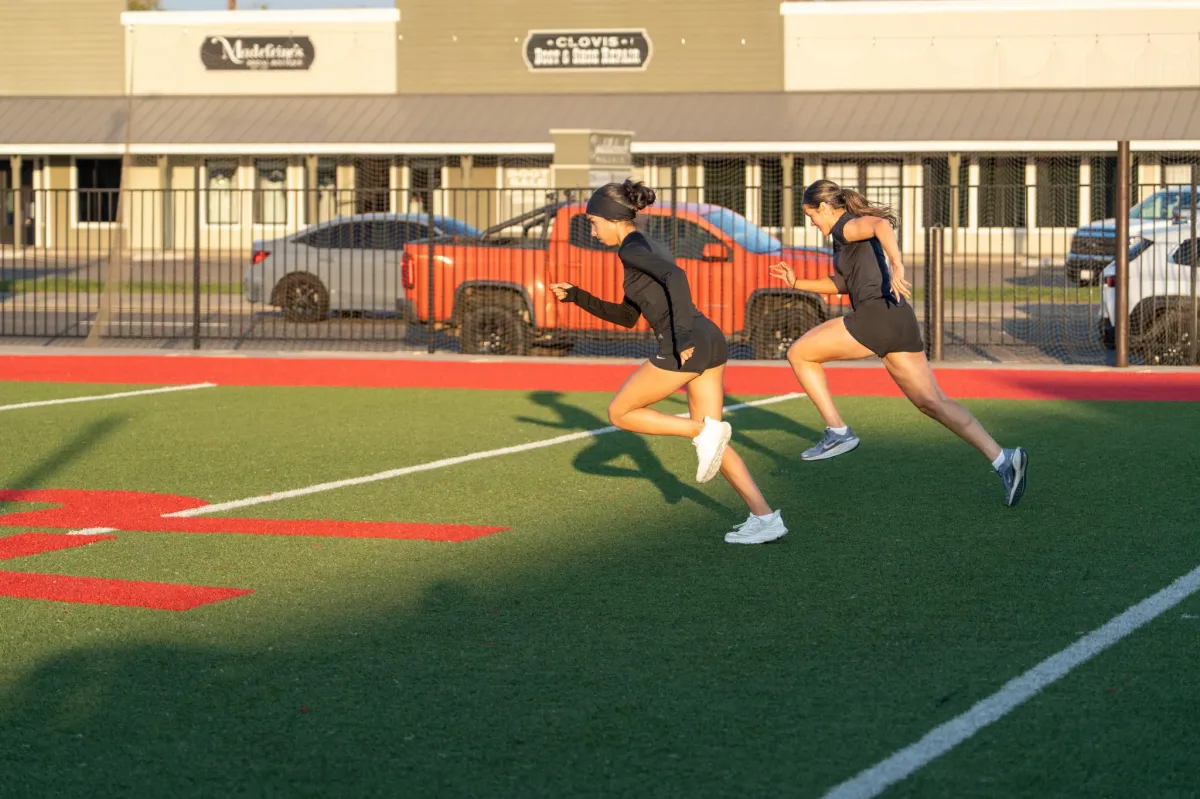
✔ Sprint Interval Training
Short bursts with rest—mirrors game play and boosts speed.
✔ Tempo Runs
Moderate-paced 50–100 yard efforts improve repeat sprint ability.
✔ Change-of-Direction Conditioning
Cone drills, shuttles, and agility patterns build stamina for real movement patterns.
✔ Sport-Specific Work Capacity
Med ball circuits, sled pushes, and controlled chaos drills work the exact energy system athletes use in competition.
These methods build lungs while maintaining (and improving) speed, power, and explosiveness.
5. The Takeaway
Long-distance running isn’t “bad”—it’s just not the right conditioning tool for most athletes.
If your goal is to:
Run a faster 60
Improve first-step quickness
Increase vertical jump
Stay healthy all season
Get more explosive
…then the best conditioning comes from sprints, intervals, agility, and strength training—not long runs.

Ready To Get Started?

PROGRAMS
ABOUT
MORE
© Copyright 2026. Athletic Performance . All Rights Reserved.